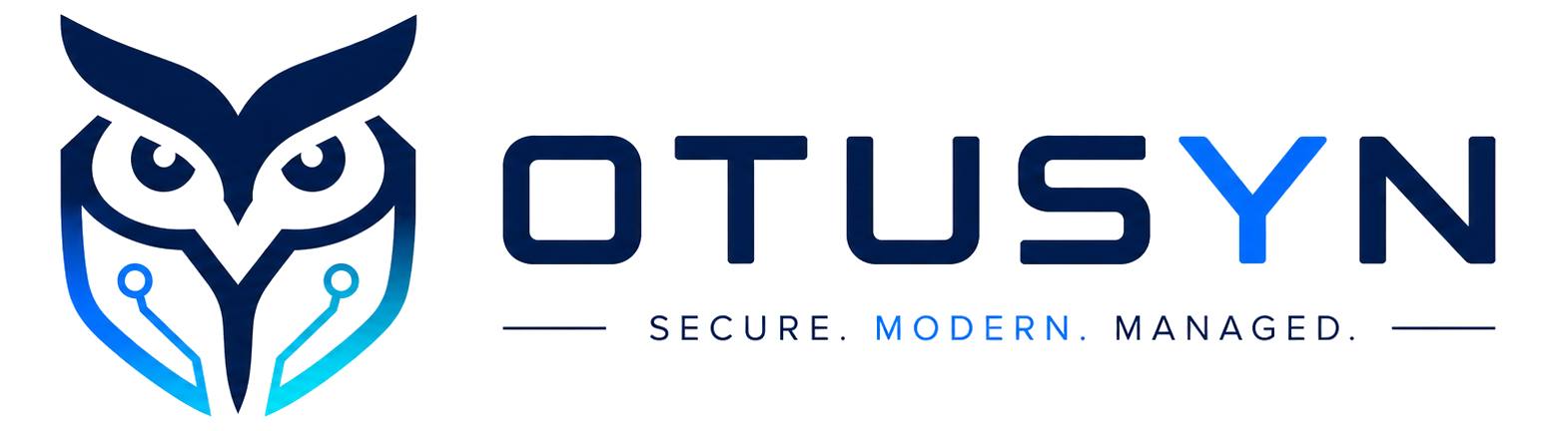
Small and growing organisations rely on technology every day. Email, cloud systems, laptops, mobile phones, shared files and online tools all help people work, communicate and serve customers.
However, as a business grows, technology can become harder to manage. New employees join, devices are added, access is shared, cloud services expand and support becomes more reactive. Small gaps that seem manageable at first can gradually create security, productivity and operational risks.
Cybersecurity does not need to be complicated or intimidating. For most small businesses, the best place to begin is with a clear understanding of the basics: who has access to systems, which devices are being used, how email and cloud tools are protected, whether backups are reliable, and whether staff know what to do when something does not look right.
This guide is Part 1 of OTUSYN’s Small Business Cybersecurity Guide. It explains where to start, how to improve visibility and why identity security should be your first priority.
What does cybersecurity mean for a small business?
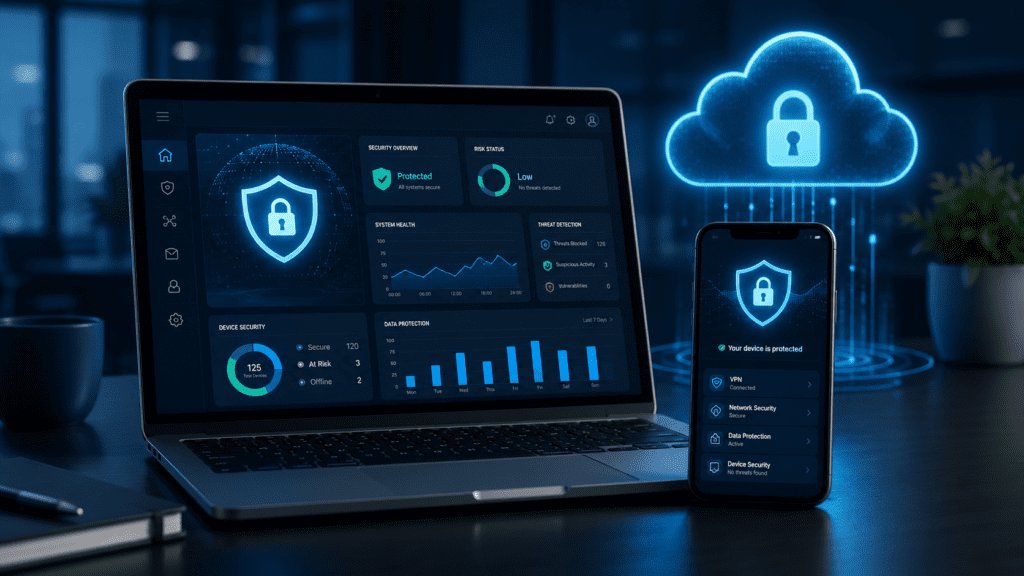
Cybersecurity is the process of protecting your organisation’s systems, devices, information and user accounts from unauthorised access, disruption, loss or misuse.
For a small business, this usually includes practical areas such as:
- Protecting email accounts and cloud systems
- Using strong passwords and multi-factor authentication
- Keeping laptops and mobile devices updated
- Managing staff access correctly
- Protecting shared files and customer information
- Making sure backups are available and recoverable
- Helping staff recognise suspicious activity
- Having a clear support route when something goes wrong
The aim is not to turn a small organisation into a large enterprise with complicated processes and unnecessary tools.
The aim is to put sensible controls in place, make ownership clear and reduce avoidable risk.
A small number of well-managed controls is usually more valuable than a long list of tools that nobody owns or understands.
Why cybersecurity matters for small and growing organisations
Many small businesses believe they are unlikely to be targeted because they are not large enough to attract attention. In reality, cyber threats are often automated. Attackers do not always focus on a specific company. They look for weak passwords, outdated devices, exposed accounts, poorly configured cloud services and employees who may accidentally click a malicious link.
A security issue can affect more than just IT. It can interrupt day-to-day work, delay customer service, prevent access to email or files, create financial loss, damage trust and place pressure on staff.
A practical cybersecurity baseline can help improve:
- Business continuity
- Staff productivity
- Customer confidence
- Protection of sensitive information
- Visibility of devices and accounts
- Compliance and governance
- Recovery from unexpected incidents
The goal is not to create fear. It is to create clarity.
Start with visibility
Before making changes, it is important to understand what already exists.
Many cybersecurity gaps appear because nobody has a complete picture of the organisation’s technology environment. A business may have old accounts, unused devices, unreviewed sharing permissions, legacy software or supplier arrangements that are no longer clear.
A useful starting point is to review:
- Staff accounts and admin accounts
- Email and cloud platforms
- Laptops, desktops, tablets and mobile phones
- Shared files and folders
- Backup arrangements
- Antivirus and endpoint protection
- Wi-Fi and network equipment
- External suppliers and IT support arrangements
- Joiner, mover and leaver processes
You do not need a perfect inventory on day one. The important thing is to begin creating a clearer picture of what is in use and who is responsible for each area.
This visibility makes later improvements more focused and more effective.
Identity and access: protect the front door
User accounts are one of the most important parts of cybersecurity.
Most business systems are accessed through an identity. That could be a Microsoft 365 account, Google Workspace account, finance platform login, CRM user account, remote access account or admin account.
If an attacker gains access to a user account, they may be able to read emails, access files, impersonate staff, send fraudulent messages or move further into the organisation’s systems.
For this reason, identity and access should be a priority.
The most important actions include:
- Enforcing multi-factor authentication
- Removing shared login accounts
- Reviewing admin access
- Using strong, unique passwords
- Removing leaver access quickly
- Checking inactive accounts
- Limiting access to only what each person needs
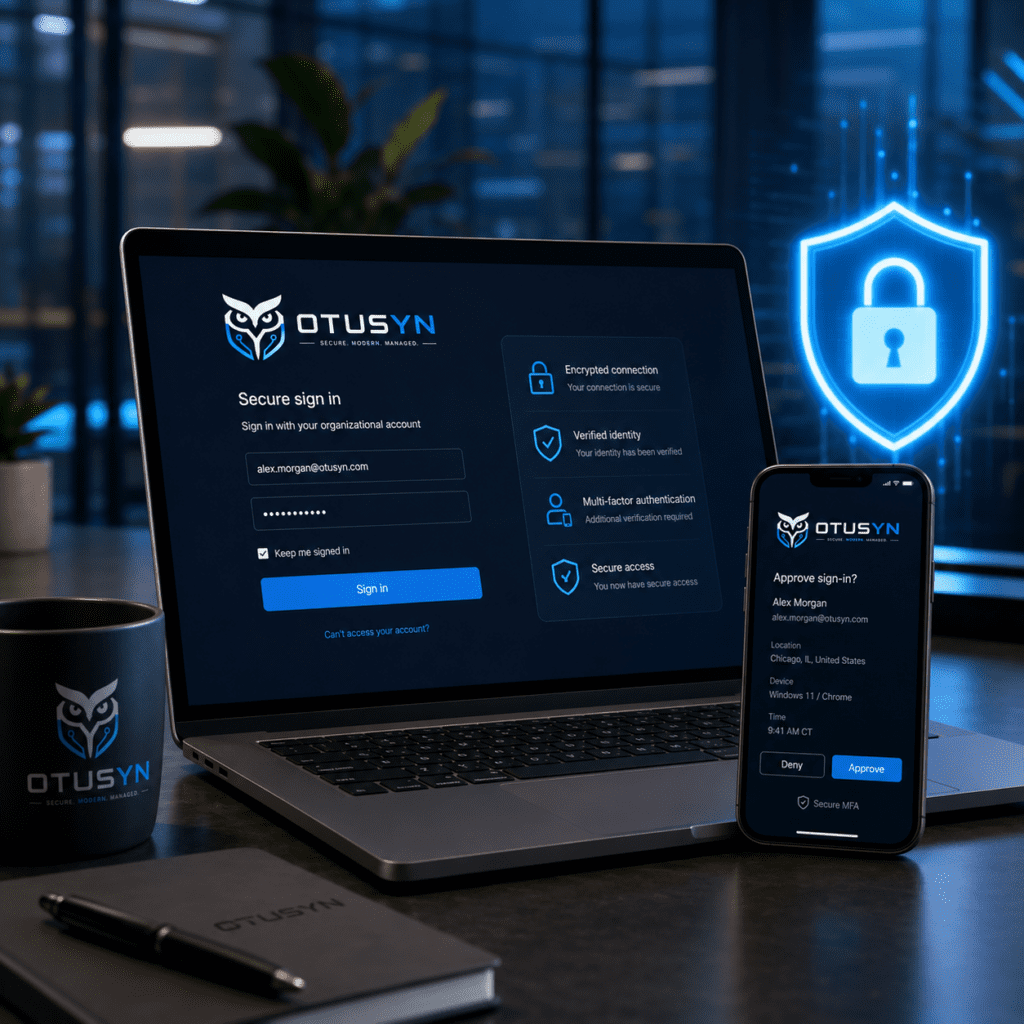
Multi-factor authentication is one of the strongest practical controls available to small businesses. It adds a second step when someone signs in, such as an app approval, code or biometric check.
This means that even if a password is stolen or guessed, an attacker is less likely to access the account.
It is also important to reduce the use of shared accounts. When several people use the same login, it becomes difficult to know who accessed information, who made changes or whether access should be removed when somebody leaves.
Named accounts create better accountability and make access management much easier.
Read more: Why Multi-Factor Authentication Matters for Growing Organisations
What to do next
Identity and access are only part of the picture. The next stage is making sure devices, email, cloud services and backups are managed in a more consistent way.
Continue reading:
Part 2: Small Business Device, Email and Cloud Security Basics →